
Installed test pipes, a catless downpipe or a full cat delete and now the dash is lit up with P0420 or P0430? Here's what the car is telling you and how a spacer fits in.
You bolted in the test pipes, fired the car up, and it sounds the way you hoped it would. Then a few drive cycles later the check engine light shows up. If that's your situation, you're far from alone. A check engine light after test pipes is one of the most common things owners run into right after a cat delete, whether the car is a Nissan Z, a Supra, a GR86, a Skyline, a Challenger or a BMW.
The good news: the light usually isn't telling you anything is damaged. It's telling you the computer no longer sees a working catalytic converter. This guide covers why that happens on any car, what the codes mean, how an O2 sensor spacer works, how to check that one will fit, how to install it, and just as important, what a spacer will not fix.
Quick note up front: test pipes and cat deletes are for off-road and competition use only, and inspection rules vary by state and country. We cover that in its own section so there are no surprises.
Most modern cars have at least two oxygen sensors per catalytic converter path: one upstream of the cat and one downstream. The upstream sensor (an oxygen or air/fuel ratio sensor, depending on the car) helps the ECU manage fueling. The downstream sensor has a different job: it watches what comes out of the cat.
The ECU compares the two signals. A working catalytic converter stores and releases oxygen, so the downstream signal stays relatively steady while the upstream signal swings back and forth. If the downstream signal starts to look like the upstream one, the ECU concludes the cat is no longer doing its job and sets a catalyst efficiency code.
Test pipes and catless downpipes replace the cat with an open section of pipe. With no catalyst in the path, the downstream sensor sees the same swinging exhaust as the upstream one, so the ECU flags it. The engine isn't misbehaving. The monitor is doing exactly what it was designed to do.
Bank 1 is the side of the engine with the number 1 cylinder, and bank 2 is the other side. On a V6 or V8 with a cat on each bank, you can see one code, the other, or both, depending on which monitor runs first. On an inline engine or a flat-four with a single catalyst you'll typically only see the bank 1 code. Naming and exact wording can vary slightly between manufacturers.
Worth knowing: These same codes also show up on stock cars with worn-out cats, exhaust leaks, failing downstream sensors or misfires. If you did not just remove the cats, don't assume a spacer is the answer. Diagnose first.
An O2 sensor spacer (sometimes called a CEL eliminator or sensor extender) threads into the sensor bung, and then the sensor threads into the spacer. That moves the sensor tip back out of the direct exhaust flow, so it sees a less aggressive sample of the exhaust. The idea is that the downstream signal no longer mirrors the upstream one as closely, which reduces the chance of a catalyst efficiency code.
The Kents O2 Sensor Spacer | CEL Delete is built for exactly this job. It's a universal part with an M18 x 1.5 thread, the standard O2 sensor bung size on most modern cars. There's no cutting and no welding: spacer into the bung, sensor into the spacer. The kit comes with a 90-degree connector and 1 nut, and it measures 3.07 in x 1.97 in (78 mm x 50 mm).
It's made for the downstream (post-cat) sensors only. Leave your upstream sensors as they are, because those are the ones the ECU relies on for fueling.
Two checks, and both take about five minutes with the car on the ground or on stands.
The Kents O2 Sensor Spacer is an M18 x 1.5 part. That is the common thread for O2 sensor bungs on modern cars, but it isn't a guarantee for every vehicle. Check the thread on your own downstream sensor and bung (it will usually be stamped or listed in the sensor specs) before you order. Some older or specialty applications use other sizes.
This is the one that catches people. The spacer is 3.07 in x 1.97 in (78 mm x 50 mm) with a 90-degree connector, so it needs room to sit. Measure the space around your downstream sensor: heat shields, crossmembers, floor pan and the transmission tunnel. If your sensor sits tight against the body, test-fit with a tape measure before you buy.
On our site the Kents O2 Sensor Spacer is listed for the GR86, MK4 Supra, GR Supra, R32, R33 and R34 Skyline, Silvia (S13/S14/S15) and Z (RZ34), and it also sits in our 350Z, 370Z, G35, G37 and Q50 test pipe categories. Those are examples, not a limit: if your car has an M18 x 1.5 downstream sensor and the room, the part is universal by design. Match your exhaust parts to your own engine and drivetrain separately, since exhaust routing differs from car to car.
This is a straightforward job, and it's easiest right alongside the test pipe install while everything is already accessible. Always follow your service manual for sensor location and torque specs for your exact car and year.
One spacer, one sensor. The Kents spacer is sold as a single spacer with one nut. If your car has two downstream sensors, as many dual-bank V6 and V8 cars do, you need two. Also remember that installing the spacer won't erase a code that is already stored. Clearing it is a separate step.
A spacer is a workaround for one specific cause. It won't help if the problem is something else:
Set your expectations accordingly: for many owners a spacer is a cheap, quick fix, and for some it takes a tune to fully settle the light.
The lowest-cost, no-software option. It's a bolt-on that works with the pipes you already own. Best for owners who want the least complexity and are comfortable with results that can vary by car.
A tune can address the catalyst monitor in software. It costs more and involves choosing a tuner and a tuning platform for your car, but it's the more complete answer if a spacer alone doesn't quiet the light.
If you want the car to stay emissions-friendly, the cleanest answer is to keep working catalytic converters in the system instead of defeating the monitor. Then the check engine light isn't something you need to solve in the first place. For example, our Kent's 350Z/G35 Resonated Flex Test Pipes (VQ35DE Only) use chrome polished stainless with integrated catalytic converters, for owners who want better flow without going catless.
| Route | What it does | What you need | Keep in mind |
|---|---|---|---|
| O2 sensor spacer | Pulls the downstream sensor out of the direct exhaust flow | One spacer per downstream sensor, M18 x 1.5 bung, room to fit it | Lowers the chance of a code; no guarantee |
| ECU tune | Addresses the catalyst monitor in software | Tuning platform and a tuner | Higher cost; setup required |
| Working catalytic converters | Catalyst monitor sees a working cat | Cat-equipped exhaust parts | Different goal than a catless setup |
We'll keep this plain. Test pipes and catless downpipes replace the catalytic converters, and that makes them off-road and competition-use products. The Kents O2 Sensor Spacer carries the same off-road and competition-only designation. Neither is legal for street use on vehicles subject to emissions regulations.
Inspection rules vary a lot by state, country and even county. Some places only check for a lit check engine light, others do a visual inspection, and some don't inspect at all. We can't promise that any setup will pass inspection, and a spacer should never be treated as a way to get around emissions requirements. Know the rules where you live and use the parts accordingly.
The spacer works with whatever catless setup you run, so the right pipes come down to your car. If you haven't picked yours yet, here are a few Nissan and Infiniti examples of the kind of install that sets these codes, and where the spacer fits in.
The Kents 370Z/G37 Test Pipes are a direct-fit replacement for the factory cats on the VQ37VHR and VQ35HR, with a 2.5" inlet and outlet matching the OEM piping, plus gaskets and hardware in the box. Pair them with the O2 sensor spacer for the downstream sensors and the install is mostly one afternoon. If you prefer a resonated version, take a look at the 370Z/G37 Resonated Test Pipes.
On the turbo side, the Kents VR30 Downpipes for Q60/Q50 are a bolt-on set for the 2017+ Q60 and 2016+ Q50 with the VR30 twin-turbo engine, built from mandrel bent stainless tubing with gaskets and hardware included. Whenever you change the pipes ahead of your sensors, the same catalyst monitor logic applies, so the same checks apply too.
Building something custom? The Kent's 2.5" Universal X-Pipe is a weld-in piece for dual-exhaust fabrication, and the Kents Universal Muffler 3.5" is a universal bolt-on for finishing the back half. Custom exhaust or not, plan where your downstream sensor bungs will land and leave room for a spacer.
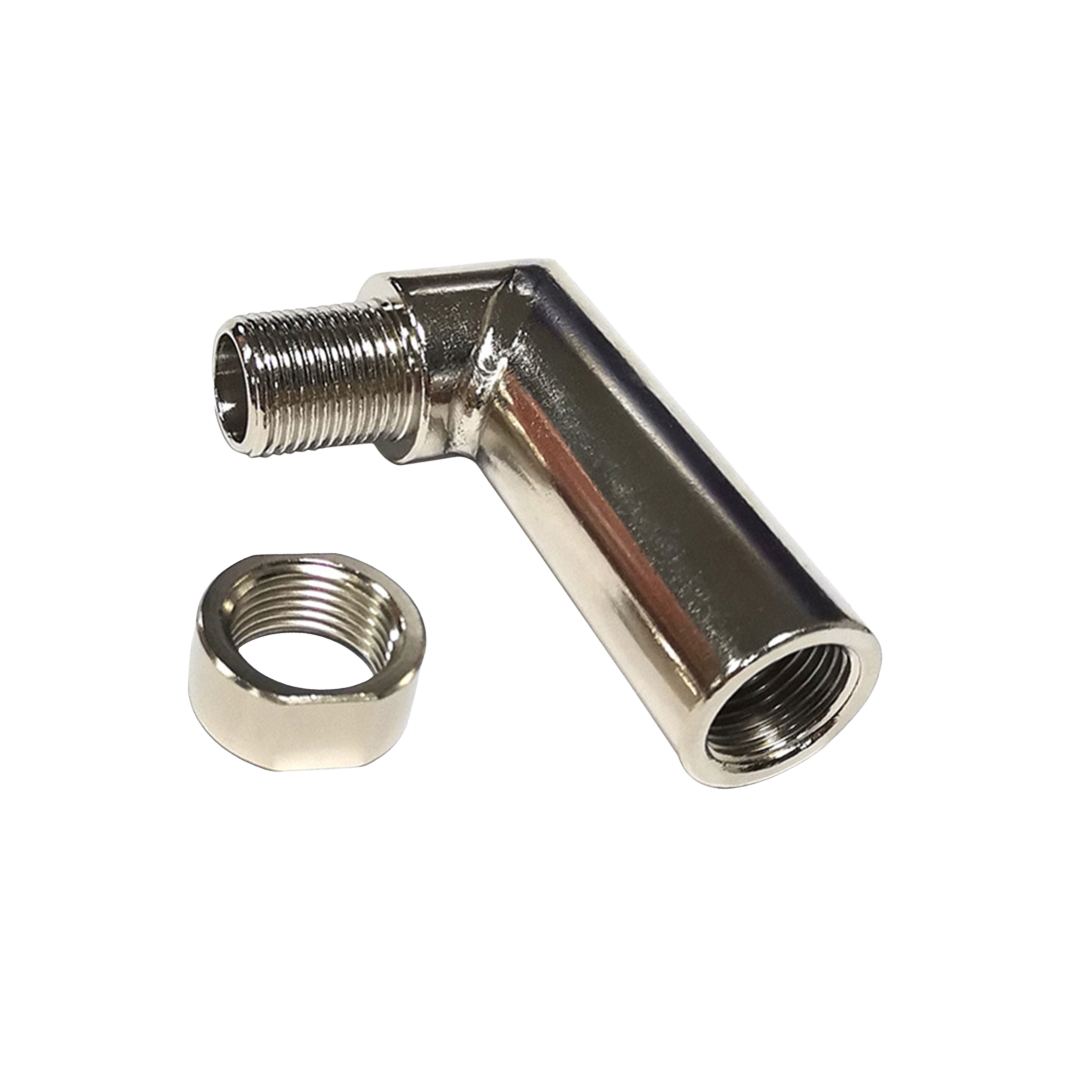
Universal M18 x 1.5 · GR86, Supra, Skyline, Silvia, Z and more
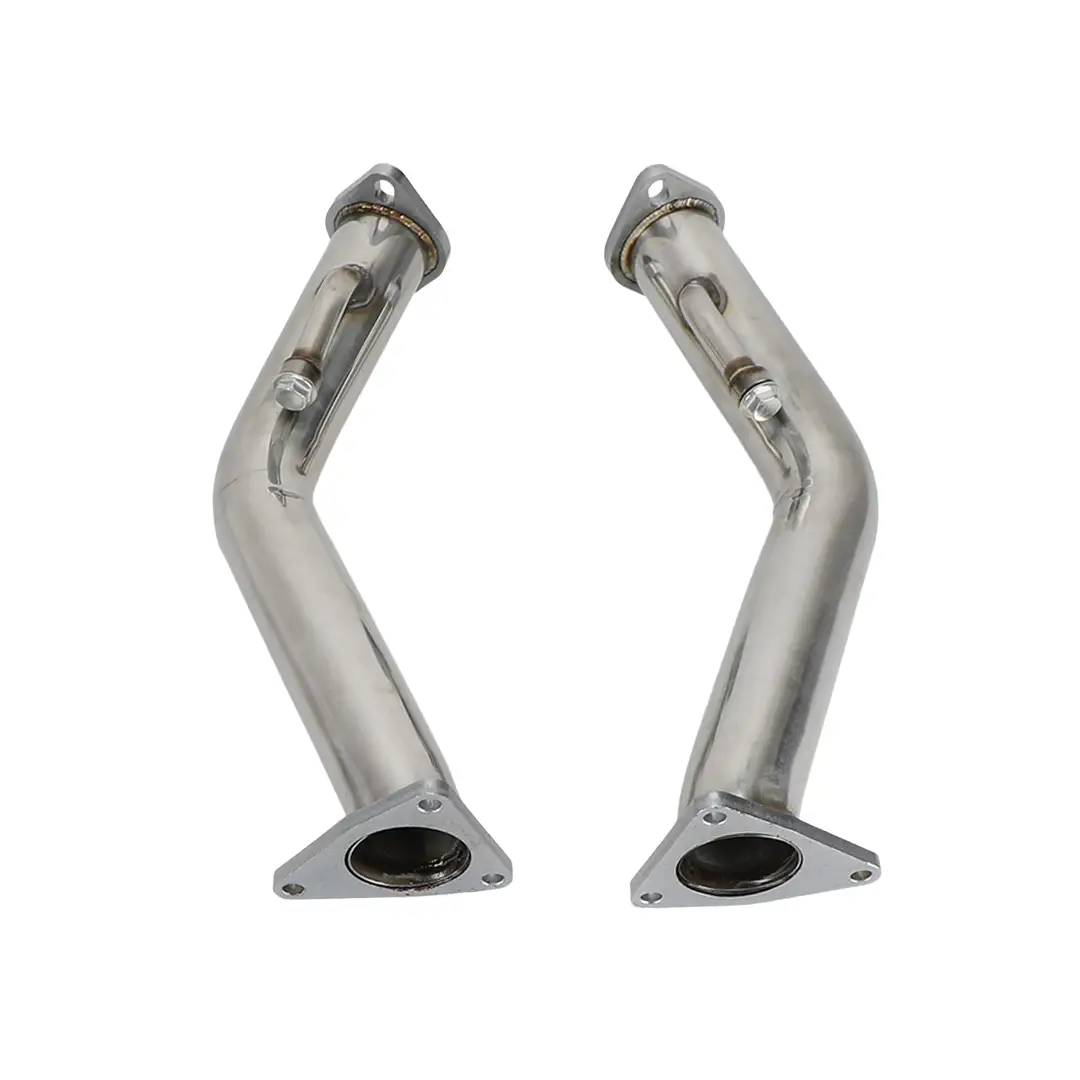
Nissan 370Z · Infiniti G37 · VQ37VHR and VQ35HR
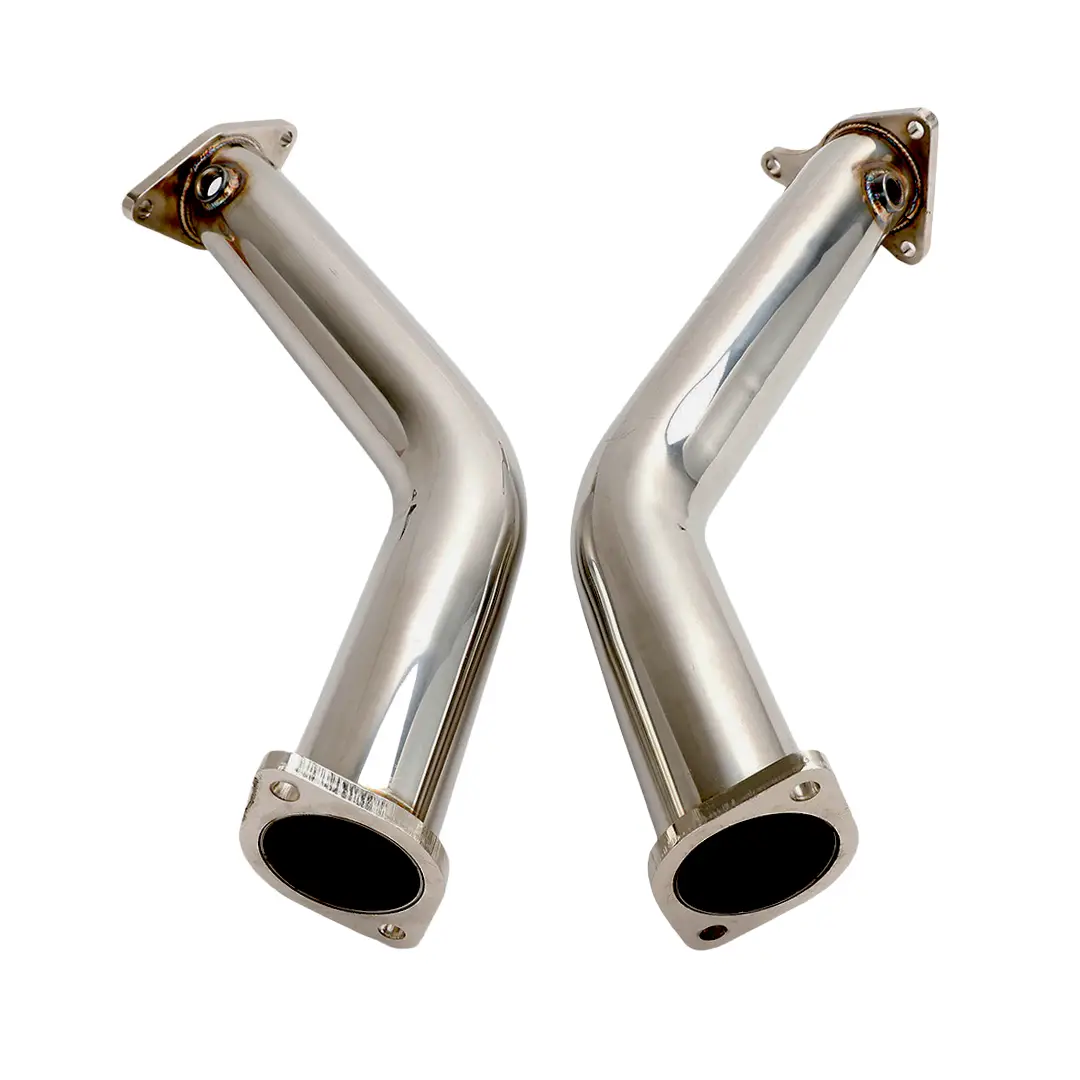
2017+ Infiniti Q60 · 2016+ Infiniti Q50 · VR30 twin turbo
A check engine light after a cat delete isn't a sign you did anything wrong. It's the catalyst monitor noticing the cats are gone. For plenty of owners, moving the downstream sensors back with a spacer is the simple, inexpensive way to deal with it, and it takes about as long as a sensor swap.
Just be realistic about it. A spacer reduces the chance of P0420 and P0430 rather than guaranteeing anything, it won't fix leaks, misfires or a dead sensor, and these parts are for off-road and competition use. Check your thread, measure your clearance, make sure the exhaust is leak-free, and you're in good shape.
Ready to sort the light? Grab the Kents O2 Sensor Spacer, and if you're still choosing pipes, start with the Kents 370Z/G37 Test Pipes or the Kents VR30 Downpipes.
Grab the Kents O2 Sensor Spacer for $34.99. Use code WELUVCHASER for 5% off your entire order.