
Everything you need to know about the two biggest bolt-on exhaust upgrades for the VQ37VHR — what each one does, how much it gains, and which order to do them in.
If you've just picked up a 370Z or G37 and you're ready to open it up, the exhaust system is where most owners start — and for good reason. The VQ37VHR is a high-revving naturally aspirated V6 that responds noticeably to exhaust work. Free up the flow, and the engine breathes better, sounds better, and makes more power. The only question is which part of the exhaust to tackle first.
Two mods come up constantly in the VQ37 community: test pipes and long-tube headers. Both attack exhaust restriction, but they target different points in the system and deliver different results. Test pipes replace the factory catalytic converters directly below the engine — a straightforward swap with immediate gains in sound and flow. Long-tube headers go upstream, replacing the exhaust manifolds themselves, rerouting exhaust gases through larger, smoother tubing before they ever hit the cats.
You don't have to choose between them forever — most serious VQ builds eventually run both. But if you're working mod by mod, it helps to understand exactly what each upgrade does, how much it adds, and which one gives you more per dollar invested. That's what this guide covers. Let's break it down.
Platform note: Everything in this guide applies to the VQ37VHR found in the 2009–2021 Nissan 370Z and 2008–2013 Infiniti G37. Kents long tube headers also fit the VQ35HR in the 350Z and G35. The Q50/Q60 VR30DDTT is a completely different engine — this guide does not apply to that platform.
The VQ37VHR cats are designed to meet emissions standards — not to optimize exhaust flow. At high RPM, they create measurable backpressure that the engine has to push against on every exhaust stroke. Test pipes eliminate that restriction entirely by replacing the cat-equipped mid-pipes with straight, open piping.
The result is a freer-flowing exhaust path that reduces backpressure and allows the VQ37VHR to expel exhaust gases more efficiently. You'll feel the difference most in the upper half of the rev range, where the factory cats do the most choking. Power gains of 5–10 rear-wheel horsepower are commonly documented on platforms with supporting mods like a cold air intake — and those gains compound significantly when you add a proper tune. On a stock car, expect the lower end of that range and a noticeably sharper exhaust note.
The bigger immediate payoff is sound. Test pipes open the exhaust voice of the VQ37VHR dramatically — that signature V6 wail at high RPM becomes much more present. If you want the most sound for the least money, test pipes are the move. The decision you'll face is resonated vs. non-resonated — and that choice has more to do with how you live with the car than how it performs.
Resonated vs. Non-Resonated: Non-resonated test pipes are straight-through — maximum volume, maximum drone on the highway. Resonated pipes add a small chamber tuned to cancel the drone frequencies common to the VQ37 at cruise speed. If this is a daily driver or a car you put highway miles on, go resonated. The performance difference is negligible; the livability difference is significant.
Long-tube headers are a more substantial upgrade. The factory exhaust manifolds on the VQ37VHR are cast iron — functional, durable, and restrictive by design. They're built for cost, packaging, and emissions compliance, not peak flow. Long-tube aftermarket headers replace those manifolds with fabricated stainless steel tubing that is larger in diameter, individually curved per cylinder, and merged into a collector that optimizes exhaust scavenging.
Exhaust scavenging is the key concept here. When exhaust gases exit a cylinder and travel through a properly tuned header tube, they create a low-pressure wave that helps draw the next exhaust charge out of the cylinder more efficiently. Long-tube headers amplify this effect because the longer tubing length keeps the exhaust gases moving at the right velocity for scavenging. The net result is more complete cylinder evacuation, which lets fresh air and fuel in more effectively — and that means more power, more torque, and better throttle response across the rev range.
Typical gains for long-tube headers on the VQ37VHR run 10–20 rear-wheel horsepower with a supporting tune. Without a tune, you'll still gain across the board, but you'll leave power on the table — the factory ECU wasn't calibrated for the improved flow characteristics, so a retune after headers is the move if you want to extract everything the engine can give. Headers also change the exhaust note — less crack, more authority, deeper tone from idle through redline.
Ceramic Coated vs. Standard Stainless: Ceramic coating on headers does two things: it keeps exhaust gas heat inside the pipe (which maintains exhaust gas velocity and flow efficiency) and it keeps radiated heat out of the engine bay. If you run tight in the engine bay — cooling lines, sensor harnesses, brake booster — ceramic coating is worth considering. Performance-wise, both deliver the same gains. Durability-wise, ceramic holds up longer in high-heat environments.
If budget forces a choice, start with test pipes. The bang-for-buck ratio on test pipes is hard to beat. You're getting most of the sound transformation and a meaningful chunk of the performance gain at a fraction of the cost and installation complexity of a full header swap. Test pipes require removing a handful of bolts and can be done in a few hours with basic tools. Headers require pulling the intake manifold, more time, and more patience.
Once test pipes are in, you'll have a much better sense of how the exhaust system feels and sounds, and the headers become the logical next step to really wake the engine up. When you stack test pipes and long-tube headers together and add a tune, you're looking at 25+ rear-wheel horsepower over stock — which on a naturally aspirated V6 making around 330 hp at the crank from the factory, is a real and noticeable improvement in how the car drives.
If budget isn't the constraint — if you're building the car to a longer-term goal — do headers first. They're the bigger structural upgrade. The test pipes slot right in after, and the combination tuned together gives you the cleanest calibration from a single retune session.
All four products ship direct and are engineered for direct bolt-on fitment on the VQ37VHR and VQ35HR platforms.
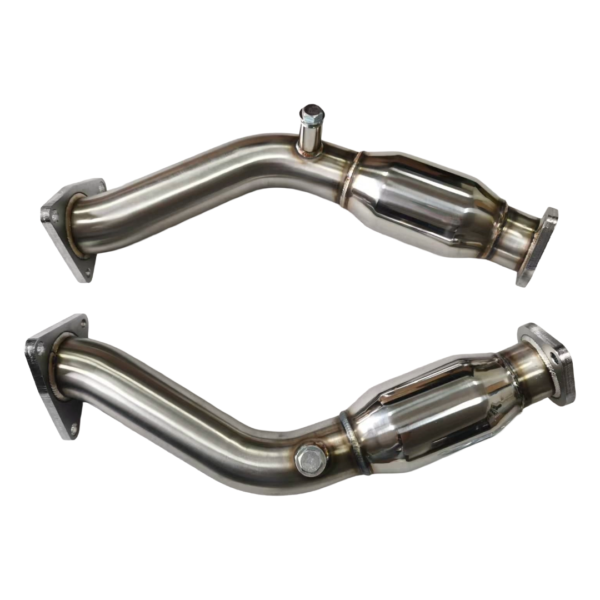 Resonated Test Pipes
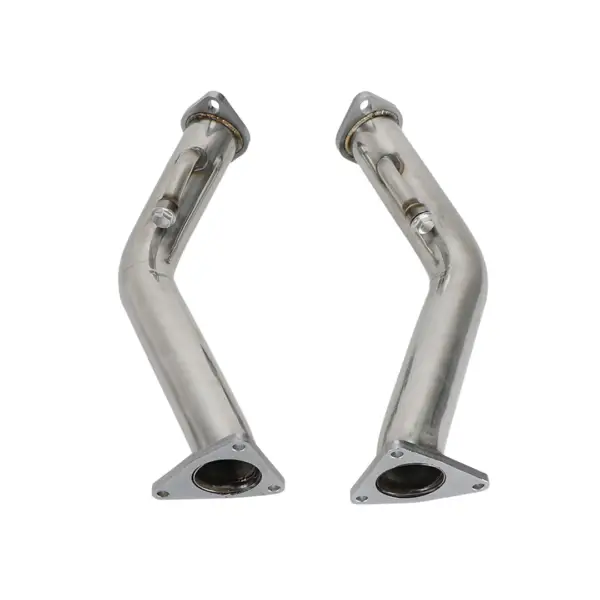 Non-Resonated Test Pipes
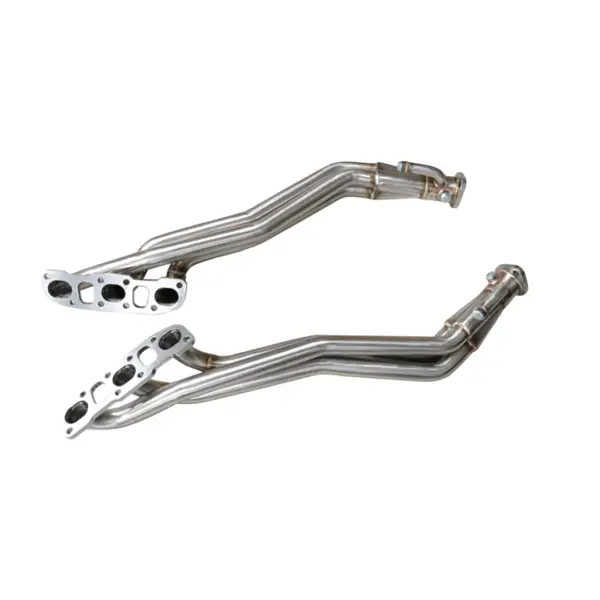 Long-Tube Headers
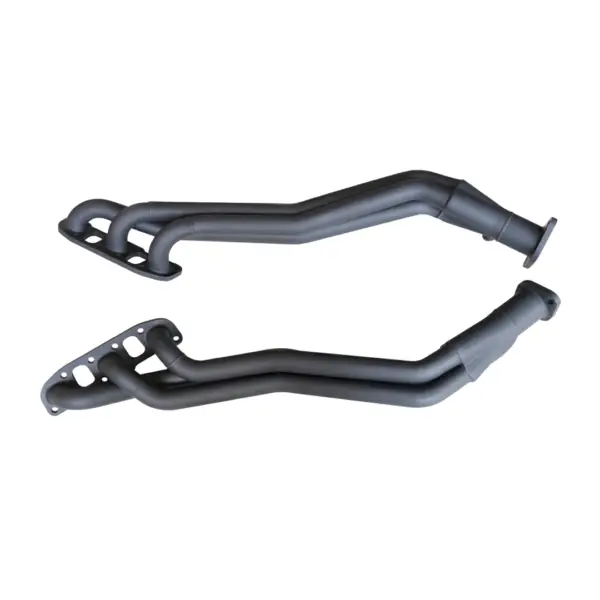 Ceramic Coated Headers
All four Chaser exhaust upgrades compared across the key decision factors.
| Factor | Kents Test Pipes | Resonated Test Pipes | Kents LT Headers | Ceramic Coated Headers |
|---|---|---|---|---|
| Estimated RWHP Gain | 5–10 whp | 5–10 whp | 10–20 whp | 10–20 whp |
| Highway Drone | Yes — straight-through | Minimized by resonator | Moderate | Moderate |
| Install Complexity | Low — ~2 hours | Low — ~2 hours | Medium — ~5–8 hours | Medium — ~5–8 hours |
| Engine Bay Heat | No change | No change | Increased | Reduced vs. standard headers |
| Tune Required? | Not required, recommended | Not required, recommended | Strongly recommended | Strongly recommended |
| Pairs With | Catback, headers, tune | Catback, headers, tune | Test pipes, catback, tune | Test pipes, catback, tune |
| Best For | Track builds, max volume | Daily drivers, street builds | Standard builds | Premium / tight engine bay builds |
The VQ37VHR rewards you when you let it breathe. Test pipes and long-tube headers are the two exhaust upgrades that have the most meaningful impact on how this engine performs and sounds — and unlike some mods that only show up on a dyno, both of these you'll feel on the street within the first few minutes of driving. The transformation is real and immediate.
If you're starting out: grab the resonated test pipes and live with them for a few thousand miles. Get a feel for the car, then add the long-tube headers and schedule a tune at the same time. That combo — test pipes, headers, and a proper UpRev or EcuTek tune — is what gets you into the 30+ RWHP gain territory over stock without touching forced induction. It's also the foundation that makes any future power mods more effective, since you're not fighting a choked exhaust system.
If you already know you're going track-focused and noise compliance isn't a concern, swap the resonated pipes for the straight-through Kents non-resonated test pipes — you'll get the same performance with everything the VQ37VHR has to say at wide open throttle. Either way, Chaser Automotive has both options in stock and both bolt on the same way.
Real questions from 370Z and G37 owners about exhaust modifications.
Shop Chaser Automotive's full lineup of bolt-on exhaust upgrades for the 370Z, G37, 350Z, and G35 — all engineered for direct fitment with no fabrication required.