Best Long Tube Headers for the Nissan 370Z and Infiniti G37: A Complete VQ37VHR Guide | Chaser Automotive
Chaser Automotive — Buyer's Guide
Best Long Tube Headers for the Nissan 370Z & Infiniti G37
What they actually do, how the VQ37VHR responds, and which headers are worth bolting on.
370Z / G37VQ37VHR & VQ35HR304 Stainless SteelStarting at $640
If you've spent any time in the 370Z and G37 community, you already know the VQ37VHR is an engine worth building. The 3.7-liter V6 makes a strong case on its own — 332 horsepower in the base 370Z, up to 350 in the NISMO — and it rewards bolt-ons more predictably than most naturally aspirated platforms at this price point. Headers are where that reward gets real. They're one of the few bolt-on modifications that move the needle across the entire RPM range, not just in a narrow band where the sensor adjustments happen to play nice.
The factory exhaust manifolds on the VQ37VHR are a compromise. Nissan built them around emissions targets, packaging constraints, and production cost — not outright performance. They get the job done for stock driving, but they're leaving measurable power on the table that long tube headers can recover. The engine doesn't care about any of that factory tuning; give it a clear path for exhaust gases and it will respond. The question is what to run, which coating to choose, and how to plan the rest of your build around them.
This guide covers all of it. What long tube headers actually do on the VQ37VHR platform, how they compare to factory manifolds, what to look for before you buy, and the specific headers Chaser carries for the 370Z, G37, 350Z, and G35.
What Are Long Tube Headers and What Do They Actually Do?
Headers replace the factory exhaust manifolds — the cast iron or steel pieces that collect exhaust gases from each cylinder and funnel them toward the catalytic converters and the rest of the exhaust system. Stock manifolds are compact by necessity; they need to fit within tight engine bay packaging and comply with emissions regulations, which means they're built thick, short, and with minimal regard for flow dynamics.
Long tube headers extend the primary tubes — the individual pipes connected to each exhaust port — significantly further before they merge into a collector. That length is doing real work. It creates what's called exhaust scavenging: as one cylinder expels its spent gases, the pulse of energy traveling down the pipe creates a pressure drop behind it. In a well-tuned long tube design, that drop arrives at the adjacent cylinder's exhaust port exactly when it opens, pulling the gases out more efficiently. The engine effectively helps itself breathe.
On a 3.7-liter V6 like the VQ37VHR, this effect is particularly pronounced because of the engine's high-revving nature and VVEL variable valve lift system. The factory intake side already does sophisticated work optimizing valve timing and lift — give the exhaust side the same freedom and you get an engine that pulls harder from mid-range all the way to the 7500 RPM redline.
Technical note: Headers replace the factory manifolds — they don't touch the catalytic converters. If you want to remove the cats and fully open up the exhaust path, that's what test pipes are for. Most builds that run long tube headers also add test pipes to complete the setup.
Why the VQ37VHR Rewards Long Tube Headers
Not every naturally aspirated engine responds to headers the same way. The VQ37VHR is a particularly good candidate for a few specific reasons.
High-revving platform: The VQ37VHR is built to rev, with a factory redline near 7,500 RPM. Exhaust scavenging benefits compound at higher RPM, where the engine is moving more air mass per unit of time and the timing of pressure waves becomes more consequential. The gains from long tubes show up across the band, but they're most noticeable in the upper third of the rev range.
VVEL variable valve lift system: Nissan's VVEL system continuously varies valve lift based on throttle input and load. With factory manifolds, this sophisticated intake-side engineering is partially bottlenecked on the exhaust side. Long tube headers let the engine use its VVEL system more freely — the exhaust no longer constrains what the intake side is trying to accomplish.
Established tuning ecosystem: After years of Z and G platform ownership in the US, the tuning side of the VQ37VHR is well understood. Getting a proper ECU tune after headers is straightforward, and the gains are documented extensively across the platform community.
Fitment-friendly layout: The VQ37VHR's transverse V6 layout gives aftermarket header manufacturers enough clearance to run proper primary tube length without extreme routing compromises. A well-made long tube header for this engine doesn't have to sacrifice tube geometry to fit — and Kents took advantage of that with their design for the 370Z/G37/350Z/G35.
In terms of documented performance, dyno data from multiple tuning shops across the platform shows long tube headers consistently producing gains in the range of 10–20 rear wheel horsepower without a tune, with properly tuned setups showing up to 20–28 RWHP depending on supporting modifications. That's not a bolt-on gain you get from intakes or resonated pipes alone — headers are a different category of modification for this engine.
Factory / Shorty Headers
Stock Manifolds & Short Tube Options
The factory exhaust manifolds are compact cast pieces designed around packaging and emissions, not flow. Shorty headers are a mild improvement over stock — they increase pipe diameter and smooth transitions — but they don't provide meaningful primary tube length, so the scavenging effect is limited.
Near-stock fitment, easier installation
Marginal gains over factory (typically 3–8 RWHP)
May retain catalytic converter fitment
Gains concentrated in lower RPM range
Not the move if you're building for top-end pull
Long Tube Headers
Full Primary Tube Length — The Real Upgrade
Long tube headers extend each primary pipe far enough to create genuine exhaust scavenging. On the VQ37VHR, this means the engine can breathe at both ends — the VVEL system does its job on intake, and the headers let the exhaust side keep pace. The result is an engine that pulls across the full RPM range.
Documented gains of 10–28 RWHP with proper tune
Broadens the powerband across mid and top-end RPM
Significant improvement in exhaust note character
Pair with test pipes to remove the cats and fully open the exhaust path
Designed for builds that will be tuned
Chaser Automotive Header Picks for the VQ Platform
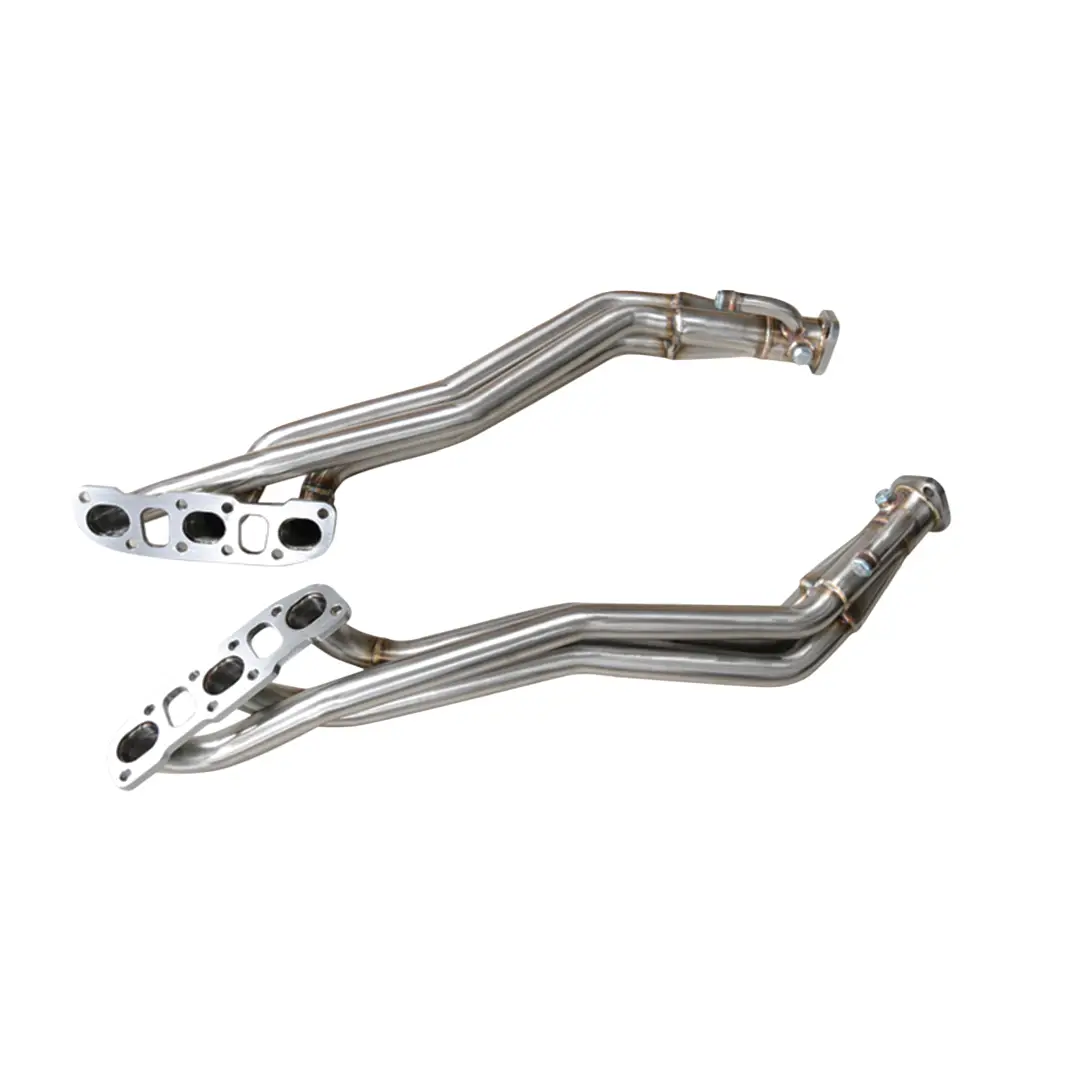
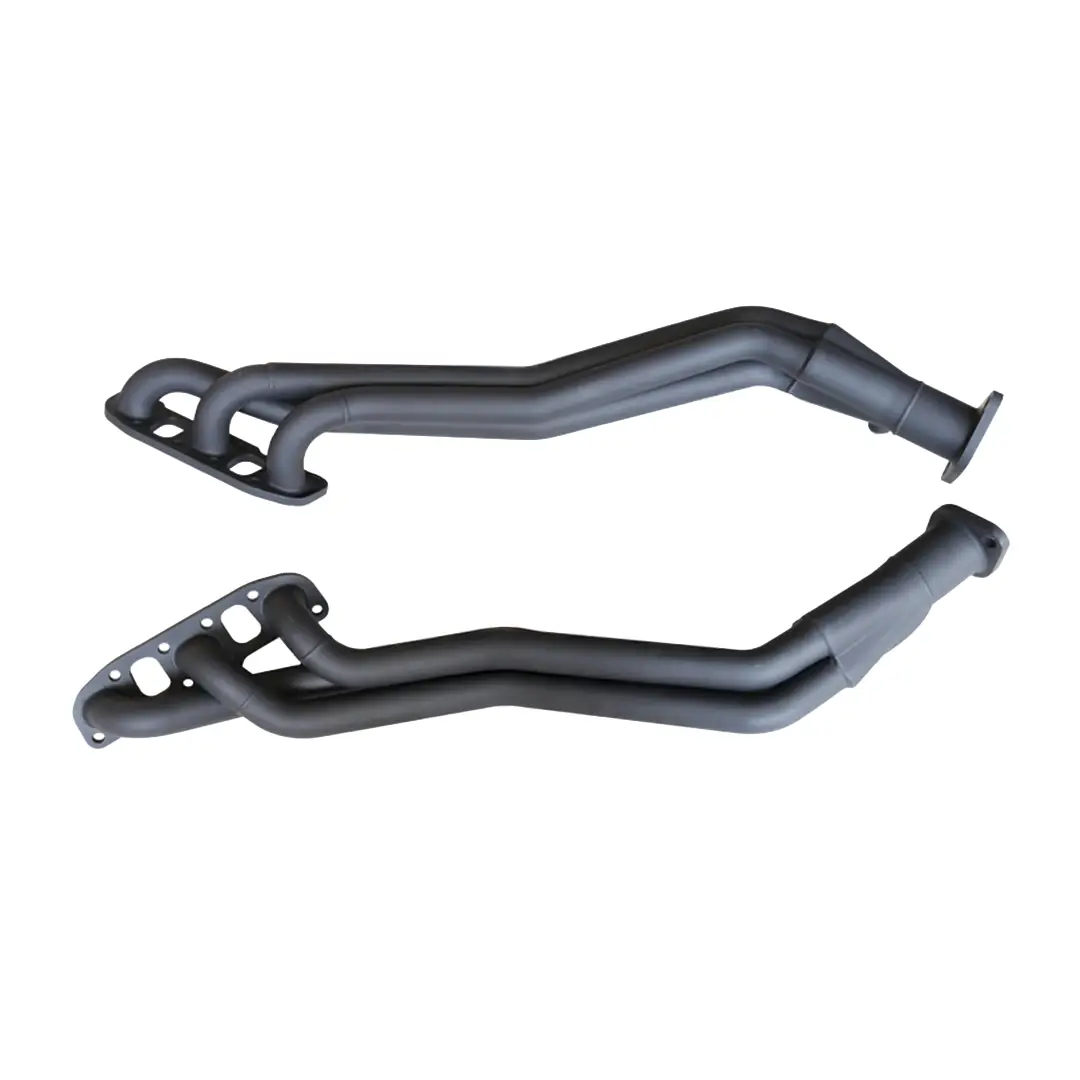
Two builds of the same long tube design — raw stainless for the build-focused buyer, ceramic coated for the one who runs it hard and wants the extra protection.
Top Pick
Kents Long Tube Headers for 370Z / G37 / 350Z / G35
If you're running long tube headers, the conversation about test pipes is worth having before you button everything up. Headers replace the factory exhaust manifolds — the section from the cylinder head through the collector. Test pipes pick up from there, replacing the catalytic converters in the downstream section. Leave the cats in place and you're still running a restriction right after the headers.
Together, headers and test pipes cover the full modification from the ports through the cat section — everything up to where the midsection picks up. The sound difference is significant with both, and the power gains from a proper tune are more complete when the system is fully open rather than still restricted at the cats.
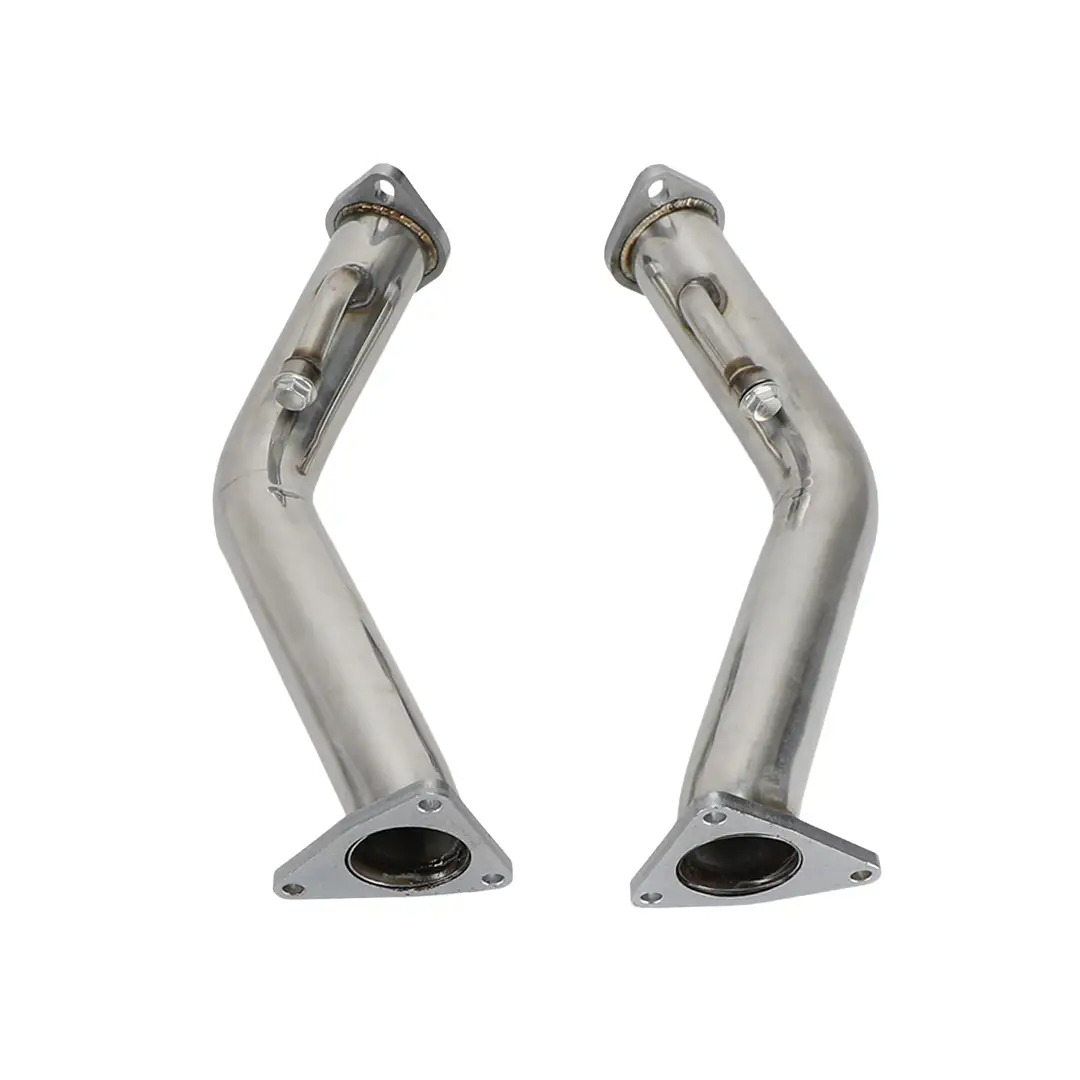
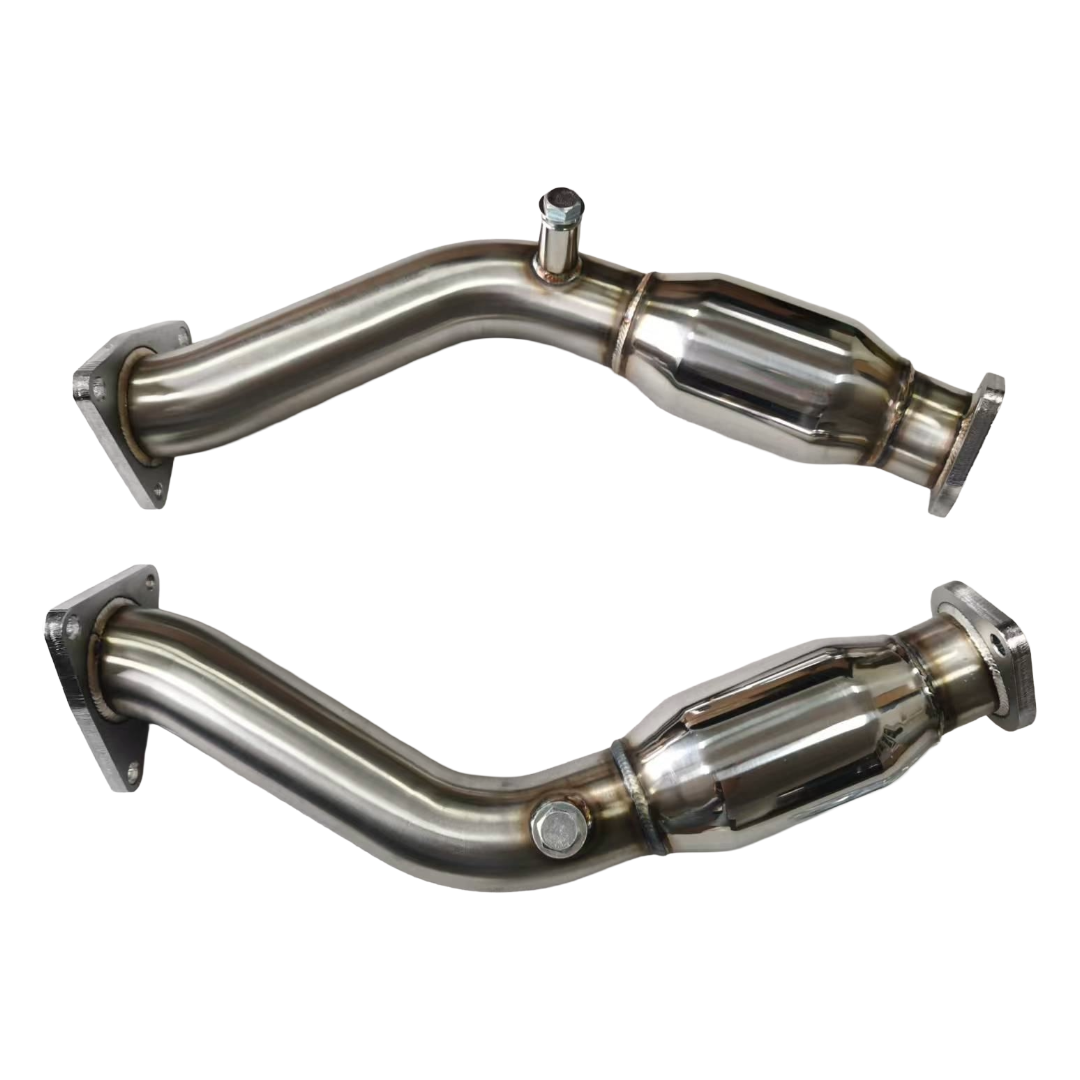
Chaser carries two test pipe options for the 370Z and G37 VQ37VHR. The Kents 370Z/G37 Test Pipes are a clean 2.5″ in/out design that matches OEM piping diameter — straightforward fitment, gaskets and hardware included, no modifications required. The 370Z/G37 Resonated Test Pipes add a resonator chamber to the design, which takes the edge off the drone that some owners notice at highway cruise with an otherwise open system. If you drive the car daily and spend meaningful time at steady throttle on the highway, the resonated option gives you the flow without the cabin fatigue.
Fitment note: Both 370Z/G37 test pipe options are designed for VQ37VHR and VQ35HR applications only. They do not fit Q50 AWD — the exhaust routing on that platform is different. If you're on a G37 or 370Z, you're in the right place.
How the exhaust modifications available for your 370Z or G37 stack up against each other at a glance.
Product
Price
Material
Coating
Removes Cats?
Best For
Kents Long Tube Headers
$640
304 Stainless
None (raw)
No — replaces manifolds
Performance builds, street & track
Kents Ceramic Coated Headers
$799.99
304 Stainless
Ceramic (black)
No — replaces manifolds
Track use, high-heat environments
Kents Test Pipes
$235
Steel
None
Yes
Open builds, track days
Resonated Test Pipes
$285
Steel
None
Yes
Daily driving, reduced highway drone
Headers + Test Pipes (Combined)
From $875
Multiple
Varies
Yes
Full open setup, manifolds + cats removed
What to Know Before You Buy Long Tube Headers for the 370Z or G37
A few things worth having on your radar before the install day.
A tune is not optional: Running long tube headers without an ECU tune will leave power on the table. If you're also removing the cats with test pipes, expect CEL codes — the downstream O2 sensors will no longer read what the factory map expects and the engine management system will compensate incorrectly. A proper tune via EcuTek, JWT, or a reputable VQ-platform tuner corrects fuel maps, ignition timing, and VTC control for the new exhaust configuration and gets the power the headers are making available.
HR and VHR fitment — not DE: The Kents long tube headers fit VQ35HR and VQ37VHR applications. They do not fit VQ35DE engines. If your 350Z or G35 is an early DE model, verify before ordering. The HR engines started in 2007 for the 350Z and G35.
LHD vehicles only: These headers are designed for left-hand drive cars. Right-hand drive fitment is not supported.
Sound character will change significantly: Long tube headers change the exhaust note at every RPM. Low-end sound becomes more prominent; the top-end pulls harder and sounds more aggressive. If you're pairing with test pipes, the combined result is a loud, open system. Plan your midsection accordingly.
Installation complexity: Headers are not a one-hour job. Plan for appropriate jack stands, tools, and possibly professional installation if you're not comfortable with exhaust system work. The Kents headers include gaskets, so you won't need to source those separately.
Shipping time: The Kents long tube headers ship within 2–4 weeks from Chaser Automotive. Build your timeline accordingly.
Frequently Asked Questions
The real questions 370Z and G37 owners are asking before they order headers.
Yes — a tune is strongly recommended when running long tube headers on any VQ37VHR or VQ35HR application. The factory ECU uses oxygen sensor signals to manage fuel trims and emissions targets, and the significantly changed exhaust flow from long tube headers means those readings no longer match the factory map. If you're also removing the cats with test pipes, the downstream O2 sensors will set CEL codes on top of that. More importantly, without a tune, the engine isn't making use of the additional flow the headers create — you're leaving real power on the table. A platform-specific ECU tune via EcuTek or a similar solution corrects fuel maps, ignition timing, and VTC control for the new exhaust configuration.
Real-world dyno data across the VQ37VHR platform puts untuned headers in the 10–20 RWHP range, with properly tuned setups showing up to 20–28 rear wheel horsepower depending on supporting mods and the specific tune. Gains appear across the full RPM range, with the most noticeable pull coming in the upper mid and top end. Torque numbers follow a similar pattern — 10–18 ft-lb gains with a tune are common across documented results. These are not marketing numbers; they reflect what multiple independent dyno sessions have produced across the platform.
Yes. The Kents long tube headers from Chaser Automotive fit the Nissan 370Z, Infiniti G37, Nissan 350Z (HR models), and Infiniti G35 (HR models). They are compatible with both the VQ37VHR and VQ35HR engine families. One important note: they do not fit VQ35DE engines — the earlier DE-spec 350Z and G35 models use a different configuration. They are also designed for left-hand drive vehicles only.
Headers replace the factory exhaust manifolds — the section from the cylinder head through the collector. The catalytic converters sit downstream of that and stay in place unless you add test pipes. Running headers without test pipes means you've opened up the manifold section but the cats are still restricting flow further back. Most builds that run long tube headers also add test pipes to get the full open setup. If you're driving the car daily and spend meaningful time at highway speeds, the resonated test pipes are worth considering — they remove the cats while also cutting down on the cabin drone that can come with a fully open system at steady throttle.
Both versions are the same long tube header design built from 304 stainless steel with the same fitment and performance characteristics. The ceramic coated version adds a black heat-resistant ceramic finish to the exterior. Ceramic coatings help retain header pipe temperatures (which can improve exhaust velocity and gas speed), slow exterior corrosion from road exposure, and give the headers a cleaner underhood appearance. If you run the car on track regularly or your build sees sustained high-heat operation, the ceramic coated headers are the more durable long-term option. For a primarily street-driven build, either option performs the same.
Headers alone don't remove the catalytic converters, but the changed exhaust flow will affect OBD readiness monitors and may cause an inspection failure depending on your state. If you add test pipes to remove the cats, the car will not pass emissions in any state that tests for catalytic converter presence. The Kents long tube headers are designed for off-road, track, or non-emissions-tested use and are most commonly paired with test pipes. If your vehicle needs to stay emissions-legal, catted headers or high-flow catalytic converters that retain cat placement would be the appropriate route.
Header installation on the VQ37VHR is not a quick job. Budget for a full day in the shop — experienced mechanics typically complete the install in 4–6 hours, but first-time installs or dealing with seized factory hardware can extend that. Proper lift access, penetrating oil on factory manifold bolts (especially on higher-mileage cars), and appropriate torque specs for reinstallation are all necessary. Chaser recommends professional installation for optimal fitment. The Kents headers include gaskets and hardware, so no additional sourcing is required for the basic install.
Final Thoughts: Are Long Tube Headers Worth It on the VQ37VHR?
For a naturally aspirated platform, long tube headers are about as meaningful a performance modification as you can make. The VQ37VHR is already a strong engine — it's high-revving, it responds to valve timing, and it loves to pull to the top of the tach. Headers let it do all of that without fighting a restriction that Nissan built in because they had to, not because they wanted to.
The Kents long tube headers available at Chaser Automotive are built from 304 stainless steel, fit the full range of VQ37VHR and VQ35HR platforms (370Z, G37, 350Z HR, G35 HR), and come with everything you need for installation. The ceramic coated version gives you the same performance with added durability for track-focused builds. Pair either with the Kents test pipes or the resonated test pipes and you've covered the full primary exhaust modification from ports to midsection. Get a proper tune on top of that and the VQ37VHR will tell you it was built for exactly this.
The $640 entry point for the standard headers is honest value for a 304 stainless long tube set with proven fitment across the platform. If you're in the middle of an exhaust build on your 370Z or G37 and you haven't addressed the headers yet, this is the next conversation to have with your build.
Get More Out of Your VQ37VHR — Start With the Headers
304 stainless construction, direct fitment for 370Z, G37, 350Z, and G35 HR models. Gaskets included. Built for the platform.
To provide the best experiences, we use technologies like cookies to store and/or access device information. Consenting to these technologies will allow us to process data such as browsing behavior or unique IDs on this site. Not consenting or withdrawing consent, may adversely affect certain features and functions.
Functional
Always active
The technical storage or access is strictly necessary for the legitimate purpose of enabling the use of a specific service explicitly requested by the subscriber or user, or for the sole purpose of carrying out the transmission of a communication over an electronic communications network.
Preferences
The technical storage or access is necessary for the legitimate purpose of storing preferences that are not requested by the subscriber or user.
Statistics
The technical storage or access that is used exclusively for statistical purposes.The technical storage or access that is used exclusively for anonymous statistical purposes. Without a subpoena, voluntary compliance on the part of your Internet Service Provider, or additional records from a third party, information stored or retrieved for this purpose alone cannot usually be used to identify you.
Marketing
The technical storage or access is required to create user profiles to send advertising, or to track the user on a website or across several websites for similar marketing purposes.